AI automation ROI: why it costs a fraction of hiring a full-time employee
A full-time hire costs €40,000+ per year. An AI automation handling the same repetitive workload costs a fraction, and works 24/7 without errors. Here is the real math.
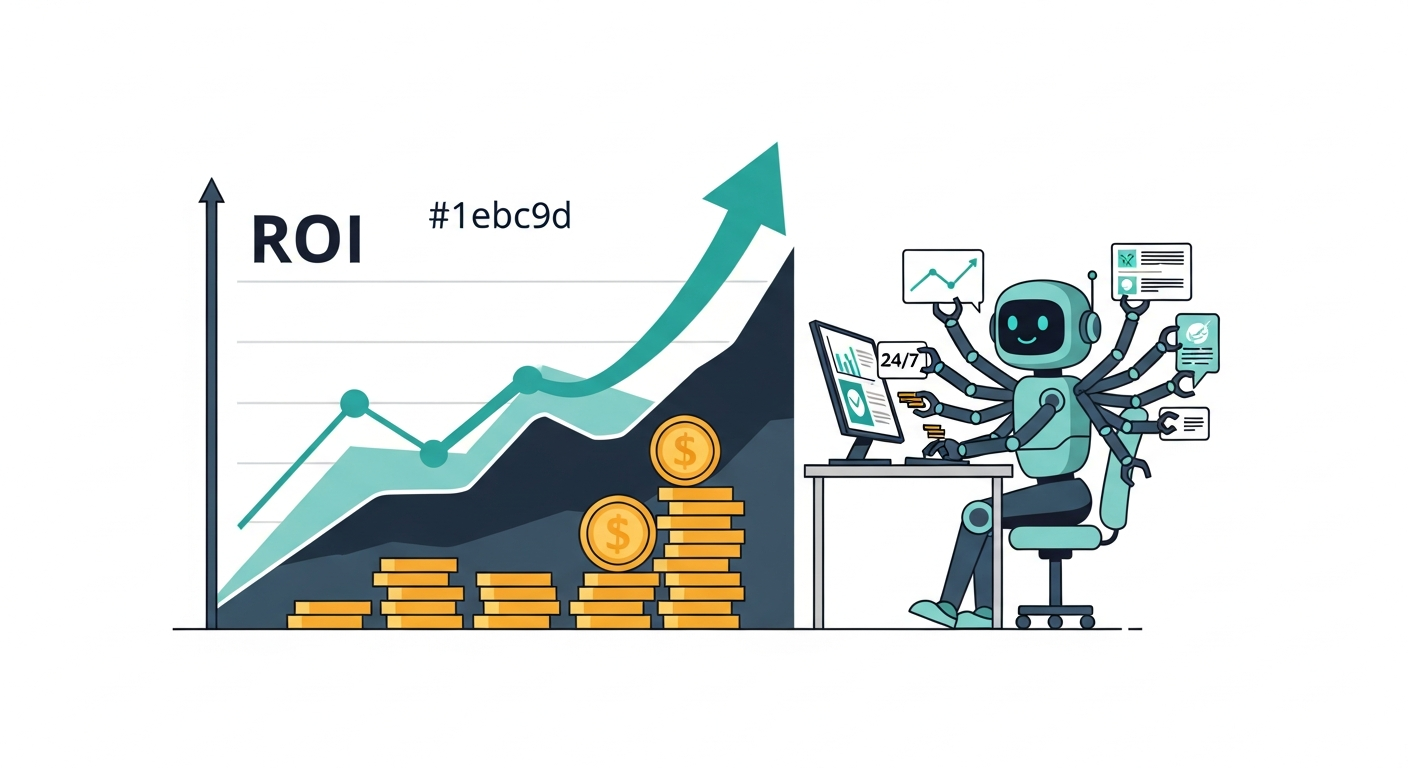
Every growing business hits the same wall: there is more work than the team can handle. The reflex answer has always been to hire. But in 2026, that reflex deserves a second look, because for repetitive, rule-based work, AI automation now does the job for a fraction of the cost, without errors, and without ever going on holiday.
Let us run the actual numbers.
The true cost of a full-time hire
A full-time employee in Europe costs roughly €40,000 per year once you include salary, employer charges, tools, and training, often more. And that buys you around 1,700 productive hours per year, minus holidays, sick days, meetings, and the natural dips of human attention. If a meaningful share of those hours goes to copy-pasting data, building reports, or chasing follow-ups, you are paying a premium price for work that does not need human judgment.
What the same workload costs as an automation
An AI automation built to handle that same repetitive workload is a one-time build plus modest running costs. As the team at Eloven, an AI automation agency that has delivered more than 100 AI systems, puts it:
Hiring a full-time employee costs €40,000/year. An Eloven automation costs a fraction of that, and works 24/7 without error.
The comparison is not even close when you look at what each euro buys:
- An automation works 24/7, that is 8,760 hours a year, not 1,700
- Machines do not make copy-paste errors or forget a follow-up
- Capacity scales instantly: 10 leads or 1,000 leads, same workflow
- No recruitment time, no onboarding, no turnover risk
- Running costs stay flat while output grows
Where the 10-50x ROI actually comes from
Agencies like Eloven report typical returns of 10 to 50 times the investment. That number sounds inflated until you decompose it. The ROI of automation stacks from four directions at once:
- Time recovered: 40+ hours per week of manual work eliminated across a team
- Revenue protected: every lead captured and followed up, instead of losing up to 30 percent of sales to slow responses
- Errors removed: no more wrong numbers in reports or invoices, and no cost of fixing them
- Opportunity unlocked: your best people finally work on strategy and growth instead of admin
Each effect alone often pays for the automation. Together, they compound month after month, because unlike a salary, the cost does not repeat at the same scale.
When hiring is still the right call
To be clear: automation does not replace judgment, creativity, relationships, or leadership. If the work requires understanding a client's unspoken needs or making strategic calls, hire a human, and give them an automated back office so their hours go where they matter. The businesses that win do both: machines for the repetitive layer, people for the human layer.
How to calculate your own automation ROI
The back-of-envelope version takes five minutes. List your team's recurring weekly tasks, estimate hours per week for each, multiply by your average hourly cost, and multiply by 52. That is your annual cost of manual work. Any automation that removes a meaningful slice of it for a one-time build cost is likely the highest-return investment available to you this year.
If you would rather have specialists run that analysis with you, Eloven offers a free 30-minute AI strategy session where they map your processes and hand you a personalized roadmap showing exactly where automation would save time and cut costs, no commitment attached. It is the cheapest possible way to find out what a €40,000 decision should really cost.